I have just presented a Tudor Costume Lecture for a ladies group at Shiremoor and a la Tom Jones was thrown (or in this case handed) some panties after my talk! I was given a lovely present of a pair of authentic cotton and lace Victorian knickers dated about 186o – so I thought I would share a brief history of this very private garment with you! the two sepia photographs included in this post are pictures of the very pretty knickers I have been given. Notice the open crotch and also the very pretty lace and ribbon trim.
Drawers or knickers were not worn by ladies until at least 1790. Before this time nothing was worn on the legs at all. It was more convenient to wear stockings, long hose and layers of petticoats under their skirts.
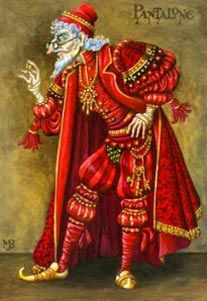
Some women, particularly wealthy ladies who wore the very sheer garments of the Empire dress period, adopted men’s pantaloons) for modesty. Pantaloons were close-fitting and to create an illusion of nudity under the dress were made of flesh coloured fabric. The word Pantaloon comes from Pantalone – a character in Italian comedy. He wore garments that came down to his ankles (when most men wore ones only to the knee). In 18th century England they were called pantaloons. By the 19th century the word became shortened to pants. Pants came to mean long drawers that covered the whole leg in Britain. The garments worn over them came became known as trousers.
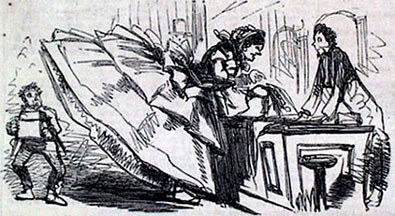
The word drawers was invented basically because underwear was ‘drawn on’.
Women’s underpants were more popular in the Americas where they started to be made in cotton and mass produced. By 1830 women’s drawers, or “trowsers,” were accepted by British women and examples and patterns of versions exist from then. Reading about clothes in those times drawers and trousers can be underwear for women and outerwear for men. There was a book published in 1840 which provided on how to craft drawers for everyone regardless of their sex and they were definitely undergarments.
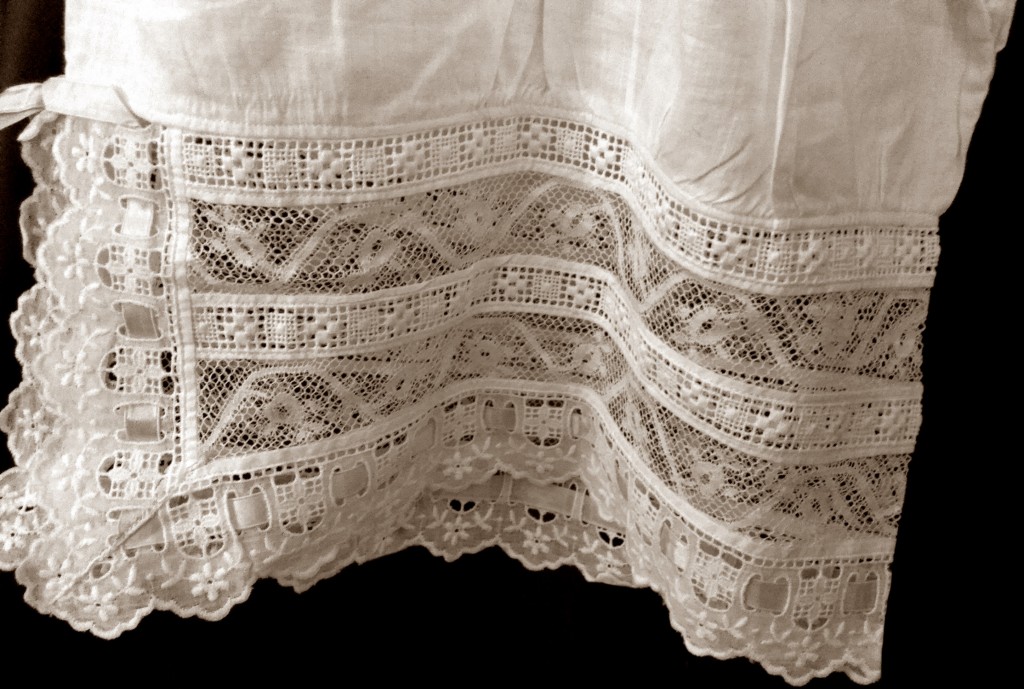
The Victorian drawers were plain in the 1840’s and tended to come down well below the knee. Each leg was finished separately and joined together at the waistband only, leaving the crotch seam open. The legs tended to be cut straight without a band at the bottom. Extra fabric at the seat prevented the open seam from gaping. Many had drawstring casings at the waist and they generally all tied or buttoned at the centre back.

Ten years later they began to be decorated and by 1868 decoration on knickers was almost always the case. The lower leg of the drawers was trimmed with lace and tucks.
With the onset of the cage crinoline which could easily be lifted up to reveal all – it became an absolute necessity to wear drawers for privacy and also warmth.
During the 1860s and ’70s drawers shortened to just below knee level. In 1867 Victorian Drawers were still open along the crotch.
At last the drawer legs of knickers merged to become closed around 1876. So my drawers must be pre 1870’s.
The open nature of the crotch was closed and an opening of about four inches closed by a few buttons existed instead at the side hip. This was a remarkable change the drawers with separate legs had become fashionable knickers. Silk and flannel as well as cotton began to be used to make knickers.
They were sometimes gathered into bands around the knee bands and a piece of fabric called a hip yoke to reduce fullness of fabric at the waist. The version with knee bands became known as knickerbockers shortened to knickers.
Many medical men advised against this practise of wearing closed drawers, they believed that a women’s private regions needed fresh air constantly to prevent dampness and hysteria! However, as a large amount of women were wearing trousers all the time it stands to reason that the doctor’s advice was ignored.
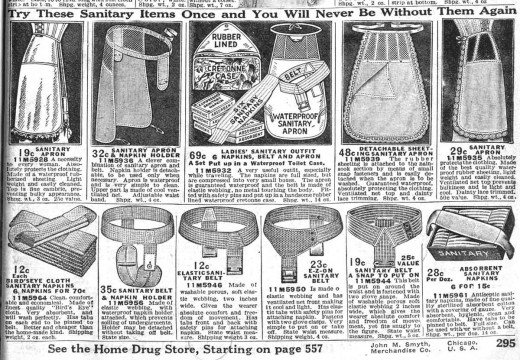
It is interesting to note that the first actual patented belted menstrual pad appeared in 1858. It was known as Jensen’s catamenial bandage. Mr. Jensen probably copied homemade versions of pads to create a ready made item for the mass market.

It has been recorded Queen Victoria had fresh, new, handmade, silk undergarments every day of from about 1837 when she became Queen. After wear the garments were taken away – washed and embroidered with her insignia and the date. Most of her undergarments were made of fine linen.
It is recorded that she had a 20″ waist when around 18 years old and this had ballooned to a massive 50 inches by the time of her death. The size of her undergarments have been studied to determine her waist size however it must be remembered that they overlapped so we have to allow a small amount of leeway. A pair of Victoria s panties was sold recently for over £3000.00 and it was also mentioned that when she passed away her dress size would have been 30 today and she would have worn size XXXL in knickers.
During the whole of the 19th Century it has been noticed that women’s drawers were perhaps the most unmentionable or immodest garment they wore in a period when almost everything seems to have been immodest and unmentionable. Remember that table legs were covered with fabric so they would not be seen!
If you have enjoyed reading this article please send me a comment – it has taken me quite a while to write and it would be lovely to know that you enjoyed reading it – thank you!

Yes, I did enjoy reading that! I wonder what women were wearing when menstruating before “bloomers”?
Regards, Dina
There is very little information about what was used for a woman’s monthly period written during the Tudor period. However, it is thought that during the 16th century cloths were used during periods – I suppose similar to the ‘Dr Whites’ sanitary pads used when I was a young girl in the early 1970’s.
Menstruation cloths were mentioned in Tudor household accounts as ‘vallopes all of fine hollande clothe’, – I know that ‘wallops’ were rags so the cloths were probably use as sanitary towels.
I read somewhere that Elizabethan household accounts listed three ‘gyrdelles of blak Jeane silk made on the fingers garnished with buckelles hookes & eyes whipped over with silk’ – an early type of sanitary belt in all probability – I suppose they were similar to the pink belts I remember wearing with ‘Dr Whites’ sanitary pads to keep them in place years ago.
A pad of linen fabric used by Tudor women seems possible, but when filled with linen wadding would make a pad which would be difficult to wash and dry especially in the winter. Although we don’t have real proof it is very possible that women used napkins stuffed with moss as sanitary pads. Like a fine sponge moss can absorb a large amount of liquid – it can also be squeezed out and reused. It is thought that sphagnum moss would absorb the blood in until fully soaked and absorb the blood flow from all directions.
Home made tampons made of fine linen, silk or wool were also made for internal use and we can suppose a string was also attached for their removal. Again sphagnum moss may have been used
As with all things necessity is the mother of invention!
I have also read that during the middle ages there was a “popular belief was that sex with a menstruating woman would kill or mutilate the semen and produce horribly deformed offspring or children with red hair or leprosy. Just the gaze of an old woman who still had her periods was thought to be poisonous- the vapours being emitted from her eyes”.
I am so glad that we live in an enlightened age!
Thanks for your reply!! I just wondered why it has taken so long to come up with a “underpants” of some sort before the last hundred years or so? Before they had to keep ” it” in place so long before? I would have thought that some sort of closed briefs would have been “invented” long before Victorias’ time! Poor women!!
You’re costumes are just beautiful! Hope to see your list of venues soon, so that I might be able to visit one or more, in the near future!
Thanks,
Dina from Holland
Thank you Dina
Don’t forget there’s still a certain debate in the choice of tights or stockings.
I agree
I have been interested in wearing knickers garnished with lace and such under my dresses. This has been a fun read for me. I may start making my own.