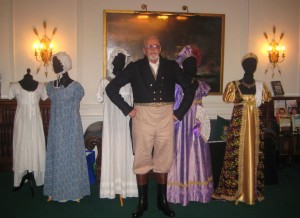
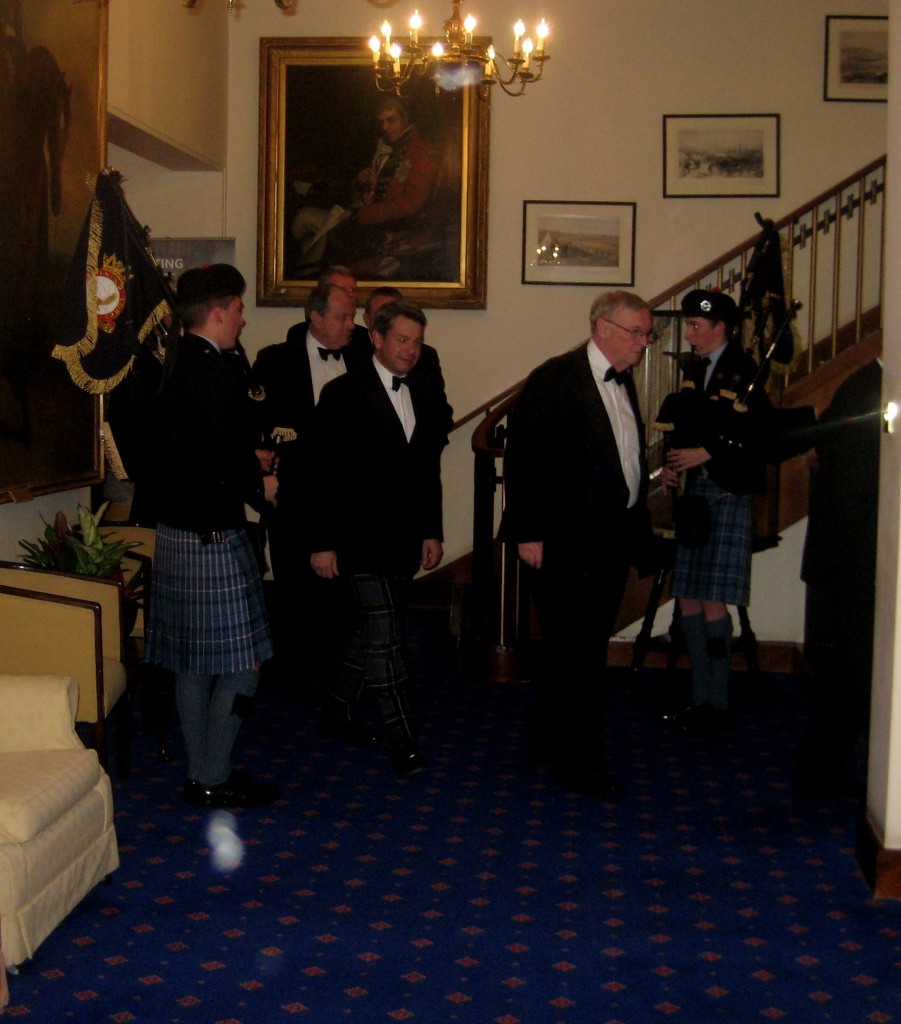
 Last Thursday 19 March we presented our talk and costume display ‘Enter the World of Jane Austen’ for the Army and Navy Club in Pall Mall in London to celebrate the bi- centenary of the battle of Waterloo in 1815.
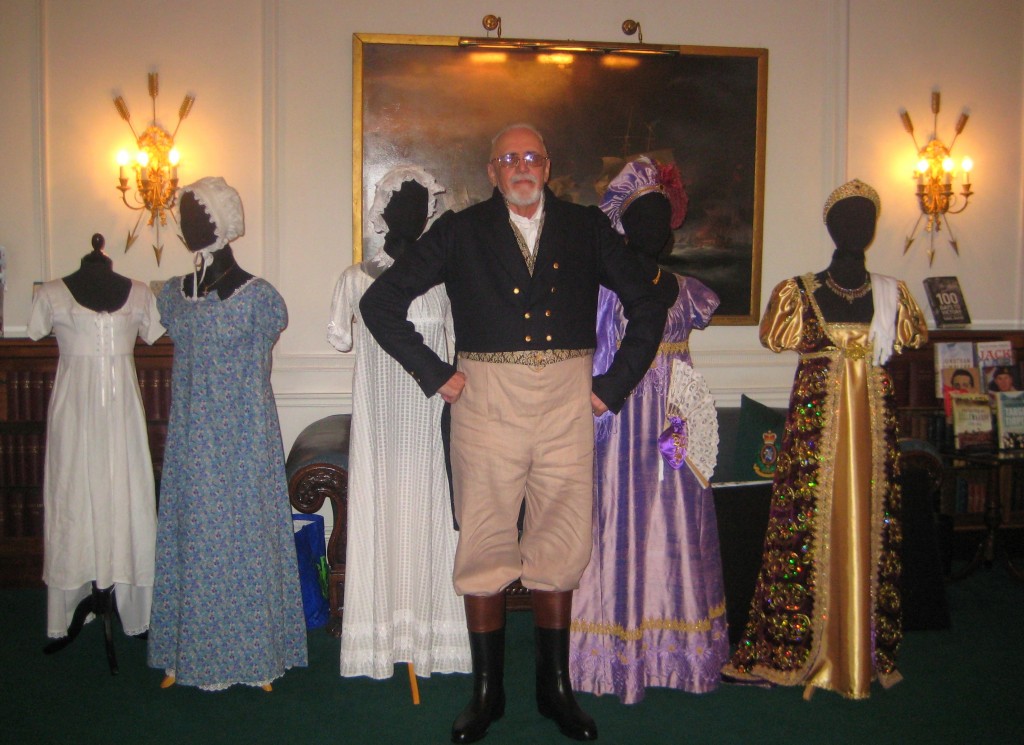
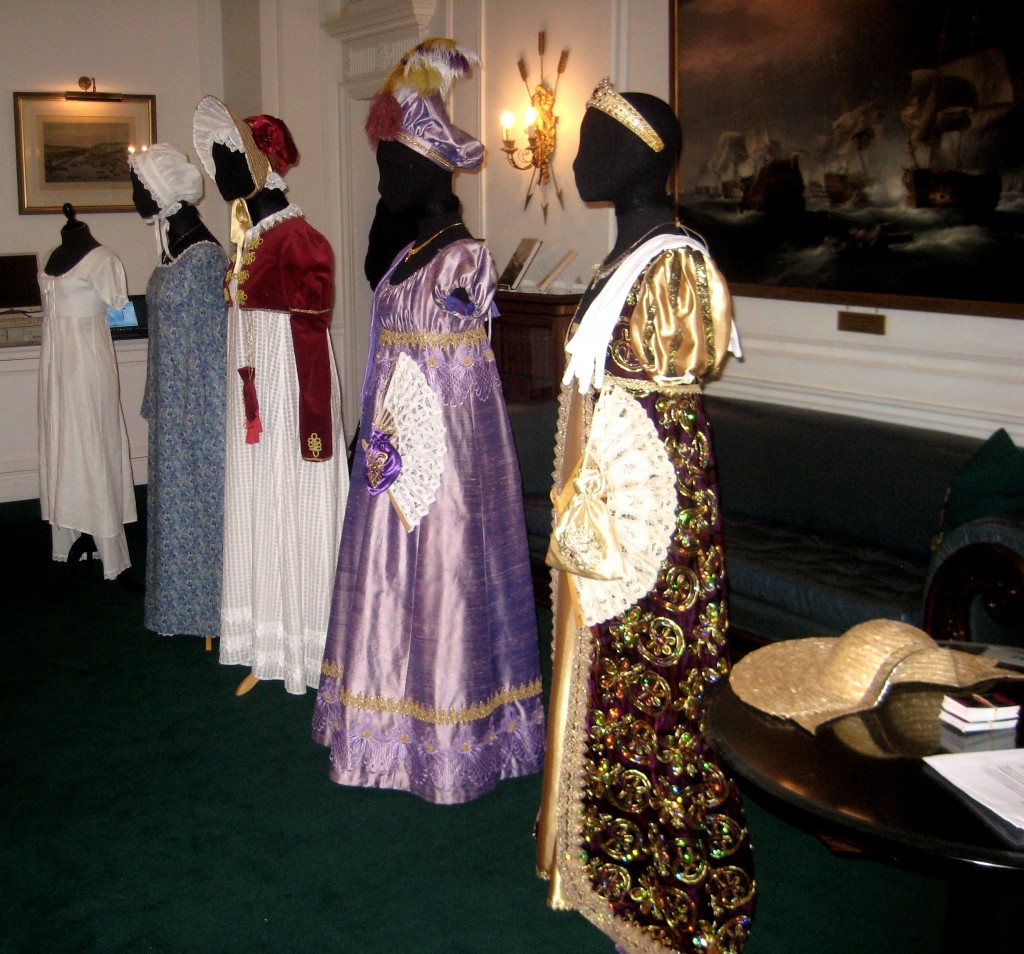
I presented a very interesting, humorous and informative lecture about the design/construction of my Regency inspired costumes. I provided a display of beautifully costumed mannequins wearing clothes inspired by the regency period – costumes for Empress Josephine and Jane Austen were included.
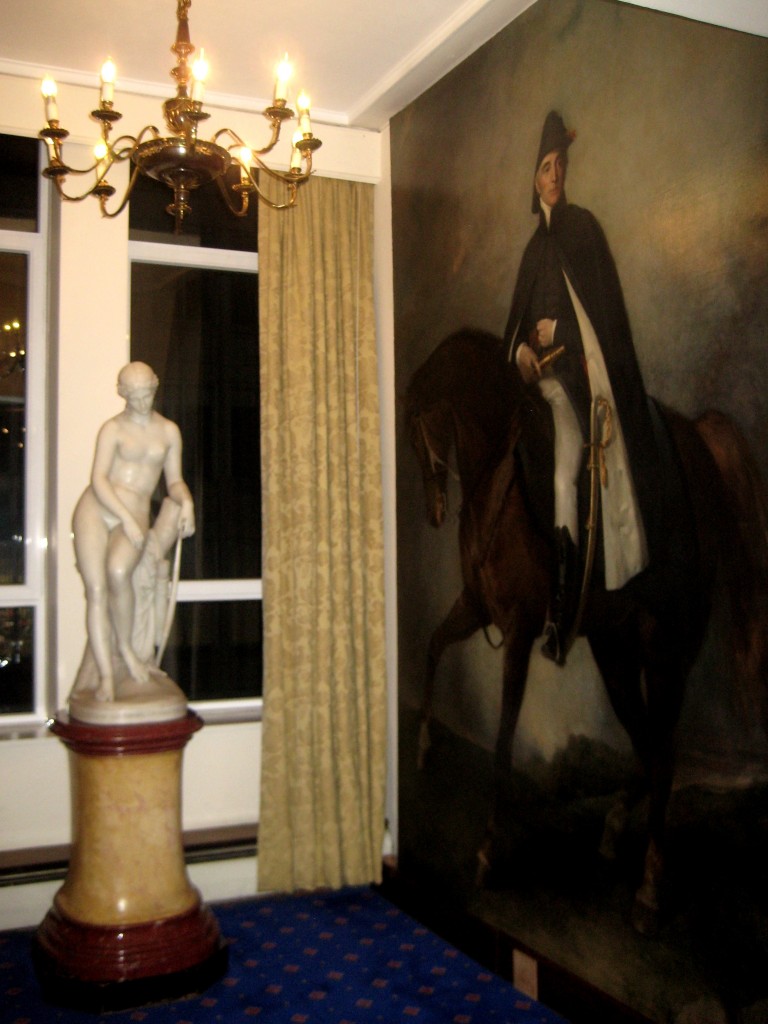
The Army & Navy Club is playing host to a series of lectures and commemorative events to celebrate and reflect on the enduring values handed down to us from those brave men who fought on the fields near Waterloo.
The Club was founded in August 1837, the year Queen Victoria acceded to the throne. The Club was formed to meet the needs of the many army officers wanting to join a Service Club, most of which were already full. The great Duke of Wellington said he would become neither a patron nor a Member unless membership was also offered to officers of the Royal Navy and Royal Marines. Hence, the “Army Club” became the Army and Navy Club. The Army and Navy Club also has close links with other military clubs in London including the famous ‘Reform Club’. The Club is also commonly know as ‘The Rag’.

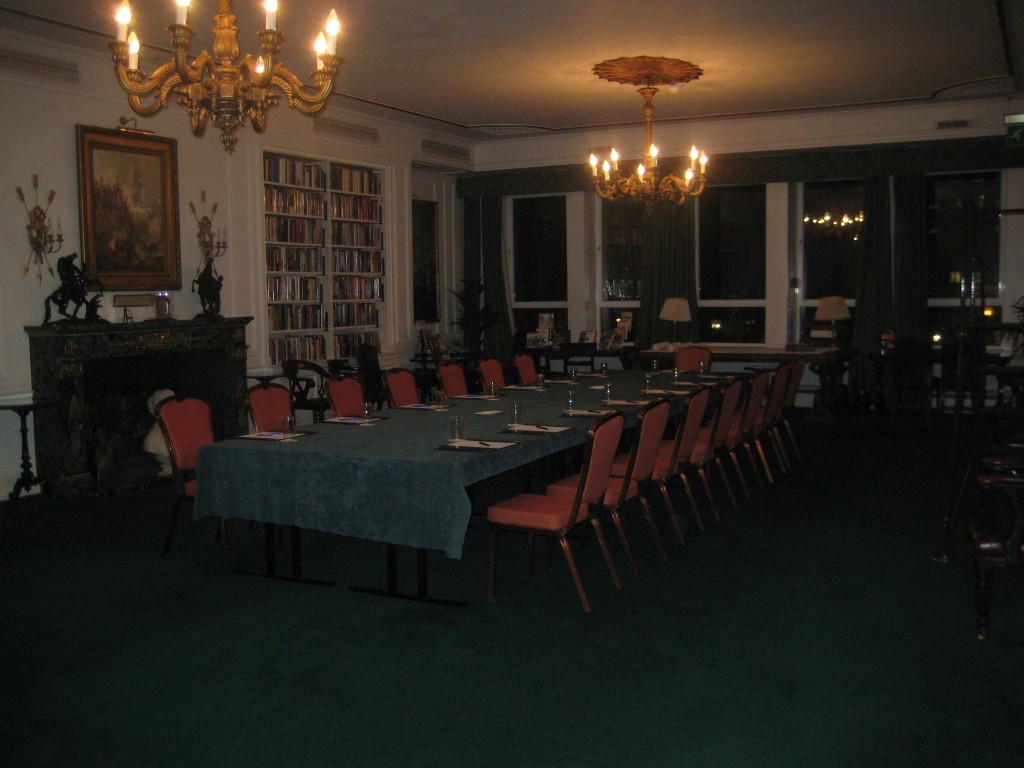
The Club is a beautiful building in Pall Mall close to St James Park and Piccadilly Circus. It has six floors which include a number of beautiful and well furnished rooms. We presented our event in the elegant library – the walls lined with books and exquisite paintings displaying a number of military events – it provided a superb setting for my costumes.
Following the French revolution and the wars in Europe clothing became much simpler and classical compared to the very ornate clothing worn previously – it is very interesting to note that this change in style was echoed almost exactly 100 years later. Following the Great War ladies clothing became much simpler and more classical than those worn during the rather fussy style of the Victorian era.
My husband was elegantly attired as a Regency gentleman – I designed his tailcoat in beautiful melton wool – a high quality cloth perfectly suited to the garment. It was interesting to note that one of the guests was a retired doctor part of the medical corps – he mentioned that his mess uniform while serving was made of a similar type of high quality wool.
Ladies at regency balls usually wore light coloured gowns so they would be noticed by candlelight – if you wore dark colours you would probably not be seen – after all you attended a ball in the hope of finding a husband! I was asked if gentlemen wore black at balls. Gentleman did indeed wear dark coats and very elegant they were.
Costumed as a Regency Gentleman my husband wore period trousers – back fastening with a flap front – I was asked if they were designed in cotton fabric. The trousers were actually made of medium weight linen – correct for the period. It is also important to mention that the fabric must be washed and dried at least three times prior to cutting as the fabric can shrink up to 10%. So must be shrunk before cutting out from the pattern.
I also visited Borovicks in Berwick St in Soho during my stay in London – a wonderful fabric shop n central London which I would highly recommend. I also visited ‘Creative Beadcraft’ located near Piccadilly Circus which is a wonderful emporium of beads and jewels – they also have an excellent mail order service.
My Regency style Bonnet proved a very popular item again – it is an quite a simple item to reproduce. I mention the making of my Regency bonnet during my talk illustrated with a very simple template. A number of the guests requested instructions.
Usually women are in the majority of my audience however on this occasion they were outnumbered by gentlemen. After the talk a number of male attendees said that they found the my talk although traditionally a women’s subject very enjoyable, interesting and humorous – so it’s not just not just one for the ladies!
I also discussed the recent costumes and popularity of the TV drama Wolf Hall with a number of guests. We agreed the costumes were very realistic and we that we have all enjoyed the series. Particularly the portrayal of Anne Boleyn by Claire Foy – she made the rather unlikeable character of Anne gain our sympathy by the time of the dramatic finale.
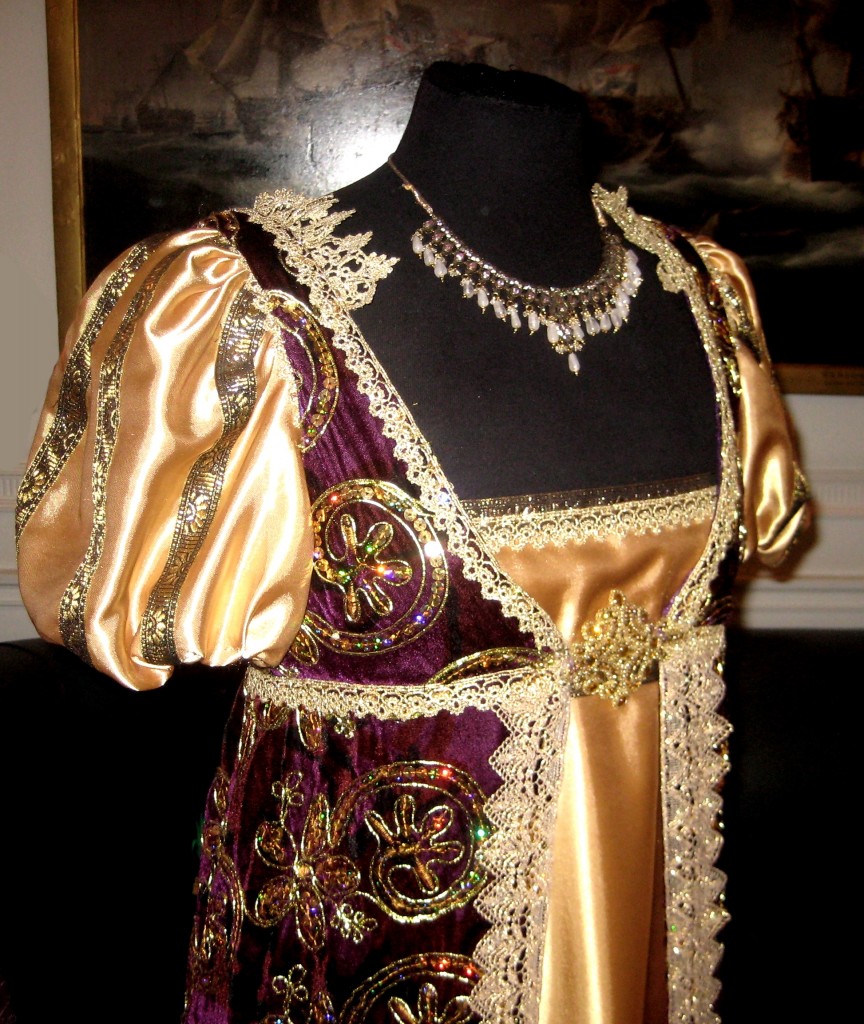
I also included a Chemisette in my talk. In the Regency era, a chemisette was commonly worn underneath a morning dress to fill in the neckline. It covered the visible shoulders and chest to make the outfit appear more modest. In fact décolleté was not shown during this period – it was considered vulgar. No fashion plates of the period show cleavage. It is a delightful way to change up the appearance of your Regency dress – it makes a very pretty and functional addition to the gown. After my talk I showed a number of guests a very famous picture of Jane Austen shows her wearing a blue dress, chemisette and cap. In an image of Jane Austen painted by Cassandra, Jane wears a simple gown; you can observe her chemisette under the low neckline, which created a more modest look for day time.
I was asked about my work for television – I am happy to mention that my Tudor Fashion show has been filmed and is to be included as part of a documentary about the life and costumes of Elizabeth I. As soon as I have details of when the documentary is to be televised, I will post it on my website.
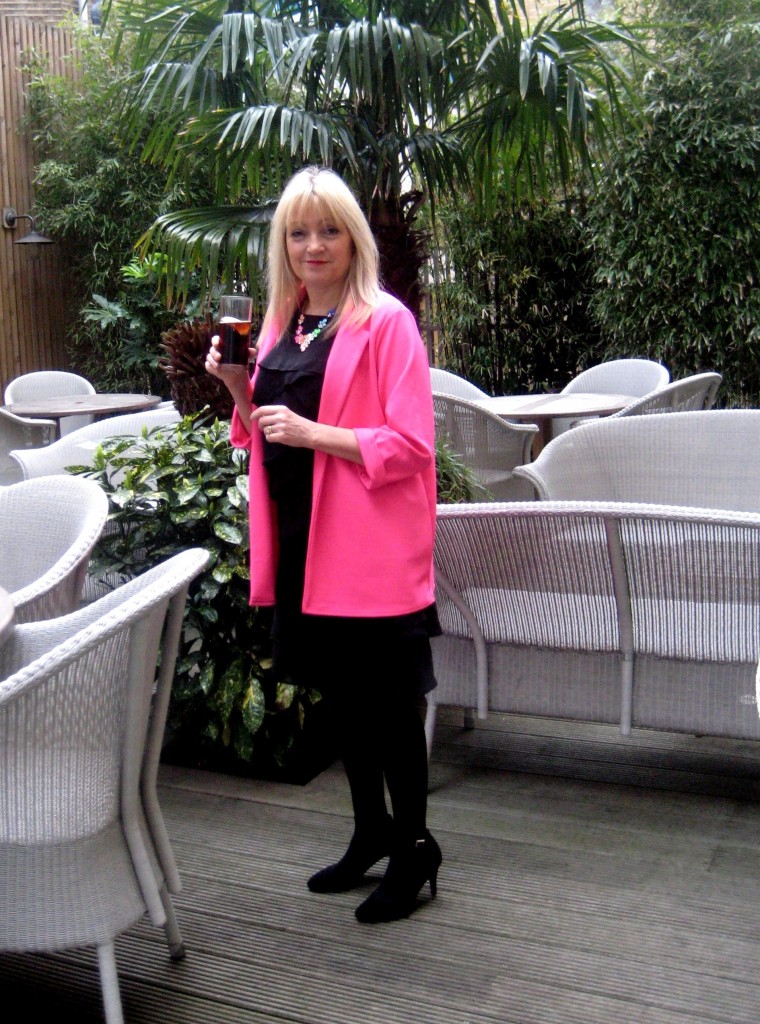
During our visit to the Army and Navy Club we stayed in a beautiful room on the fourth floor and dined both in the elegant dining room and the lovely Ribbon Terrace Bar.
I would like to thank Seye from the Army and Navy Club in London for all his help and hospitality in making our event such a success– we certainly enjoyed presenting it!
We received the message below from Seye at the Army and Navy Club after our event.
” Thank you so much – the event was a riveting success, subsequently, a lady who attended the event asked me to forward on your contact details as they were thinking of booking you for a costume talk in Kent. I will certainly pass on your thanks to Lt Col John White, the committee member who was present at the talk. I do look forward to hearing from you again in the not too distant future.”
